


 Cart
Cart
 sales@molnova.com


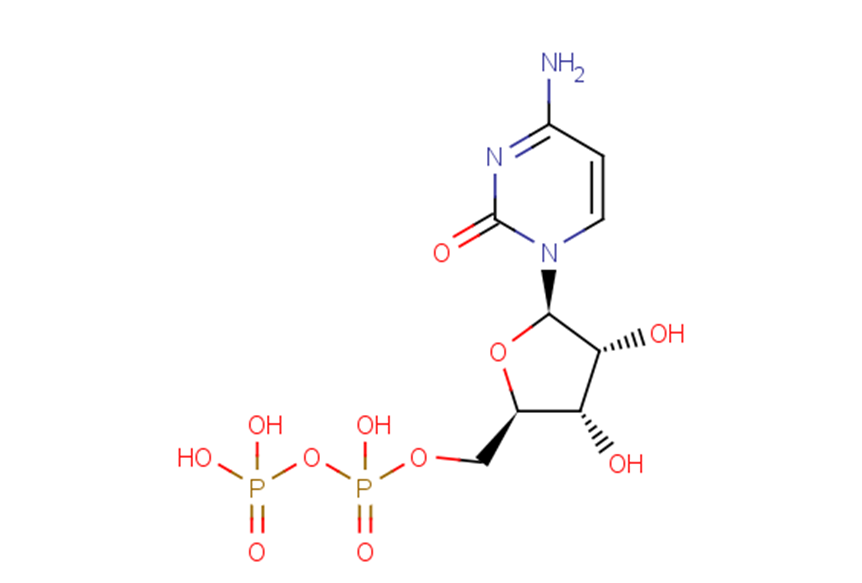
Sulbactum Sodium
CAS No. 63-38-7
Sulbactum Sodium( Cytidine-5′-diphosphate,5'-CDP )
Catalog No. M22754 CAS No. 63-38-7
Sulbactum Sodium is synthesized from cytidine monophosphate (CMP) or uridine monophosphate (UMP) by the transfer of phosphoryl group, catalyzed by the enzyme uridylate kinase (UMPK).
Purity : >98% (HPLC)
 COA
Datasheet
HNMR
HPLC
MSDS
Handing Instructions
COA
Datasheet
HNMR
HPLC
MSDS
Handing Instructions
| Size | Price / USD | Stock | Quantity |
| 5MG | 45 | In Stock |


|
| 10MG | 68 | In Stock |
|
| 25MG | 115 | In Stock |
|
| 50MG | 173 | In Stock |
|
| 100MG | 258 | In Stock |
|
| 200MG | 388 | In Stock |
|
| 500MG | Get Quote | In Stock |
|
| 1G | Get Quote | In Stock |
|
Biological Information
-
Product NameSulbactum Sodium
-
NoteResearch use only, not for human use.
-
Brief DescriptionSulbactum Sodium is synthesized from cytidine monophosphate (CMP) or uridine monophosphate (UMP) by the transfer of phosphoryl group, catalyzed by the enzyme uridylate kinase (UMPK).
-
DescriptionSulbactum Sodium is synthesized from cytidine monophosphate (CMP) or uridine monophosphate (UMP) by the transfer of phosphoryl group, catalyzed by the enzyme uridylate kinase (UMPK).
-
In Vitro——
-
In Vivo——
-
SynonymsCytidine-5′-diphosphate,5'-CDP
-
PathwayOthers
-
TargetOther Targets
-
RecptorOthers
-
Research Area——
-
Indication——
Chemical Information
-
CAS Number63-38-7
-
Formula Weight403.18
-
Molecular FormulaC9H15N3O11P2
-
Purity>98% (HPLC)
-
Solubility——
-
SMILESNc1ccn([C@@H]2O[C@H](COP(O)(=O)OP(O)(O)=O)[C@@H](O)[C@H]2O)c(=O)n1
-
Chemical Name——
Shipping & Storage Information
-
Storage(-20℃)
-
ShippingWith Ice Pack
-
Stability≥ 2 years
Reference



-
γ-2-MSH (41-58), ami...
Melanocortin (MC) 3-MSH (Melanocyte-Stimulating Hormone) is believed to signal through the MC 3 receptor. It induces a sustained increase in intracellular free calcium levels ([Ca2+]i) in a subpopulation of pituitary cells. Most of the cells responding to 3-MSH express more than one pituitary hormone mRNA. The effect of 3-MSH is blocked by SHU9119, a MC3R and MC4R antagonist, in only 50% of the responsive cells, suggesting that in half of these cells the mediating receptor is not the MC3R. Low picomolar doses of 3-MSH increase [Ca2+]i in the growth hormone (GH)- and prolactin (PRL)-secreting GH3 cell line.
-
Malvidin-3-glucoside...
Malvidin-3-glucoside chloride (Malvidin-3-O-glucoside chloride), a major wine anthocyanin, is effective in promoting resilience against stress by modulating brain synaptic plasticity and peripheral inflammation.
-
(S)-3-AMino-2-Methyl...
(S)-3-AMino-2-Methylpropanoic acid-HCl is a chemical compound.
